Before we dive into one of the most celebrated marketing campaigns of the 21st century, let me share something that should concern every marketer: only 2% of women worldwide described themselves as beautiful when Dove conducted its research in the early 2000s. Another 68% agreed that media and advertising set unrealistic standards of beauty. This wasn’t just depressing data. It was a business opportunity disguised as a cultural crisis. What Dove did next transformed not only a soap brand but also demonstrated a fundamental principle that many marketers still struggle to implement: the delicate balance between long-term brand building and short-term sales activation.
Dove’s journey from a creamy soap bar to a purpose-driven beauty empire offers profound lessons about marketing effectiveness that transcend the beauty category. The campaign’s brilliance wasn’t just in challenging beauty stereotypes. It was in masterfully orchestrating what marketing effectiveness experts Les Binet and Peter Field call “the long and the short of it”. This case study reveals how strategic patience, combined with tactical precision, creates sustainable competitive advantage.
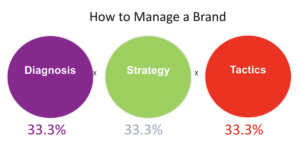
The foundation: diagnosis before strategy
Dove’s story began in 1957 with a simple but powerful positioning: it wasn’t just soap, it was a cream. This naturalistic portrayal of women struck a chord with consumers for decades. But as Unilever prepared to expand Dove into multiple beauty categories in the early 2000s, the brand needed something stronger than just being “creamy”.
Rather than rushing into tactical campaigns, Dove invested heavily in understanding the underlying consumer psychology. The brand commissioned extensive global research involving more than 3,000 women across multiple countries to explore how they thought about beauty. The findings were startling in their consistency and their bleakness.
The research revealed a beauty paradox that went beyond simple dissatisfaction. Only 2% of women described themselves as beautiful, only 5% as pretty, and more than half used words like “natural” or “average” to describe themselves. Perhaps most damaging: 72% of women admitted they felt worse about themselves after reading a women’s magazine. The beauty industry, meant to make women feel beautiful, was systematically undermining their self-esteem.
This comprehensive diagnosis became the foundation for everything that followed. Dove understood that the problem wasn’t product features or pricing. It was a fundamental disconnect between how the industry portrayed beauty and how real women experienced it. Armed with this insight, Dove crafted a mission that would define the brand for the next two decades: to make women feel beautiful every day by broadening the narrow definition of beauty.
The strategic framework: dual communications model
Here’s where Dove’s approach becomes a masterclass in marketing effectiveness. The brand didn’t simply launch feel-good campaigns about real beauty and call it a day. Instead, Dove developed what they called a “dual communications model”, a sophisticated two-speed approach that balanced mission-driven brand building with tactical product marketing.
On one hand, Dove created emotionally resonant campaigns that challenged industry norms and built cultural relevance. The 2004 outdoor advertising campaign featured real women of different sizes, ages, and ethnicities, asking viewers to vote on whether they were “Fat or Fit” or “Withered or Wonderful”. The 2005 “Firming” campaign showed real women in their underwear testing products on their actual bodies, a radical departure that generated enormous media attention simply because seeing real bodies in advertising was so unusual at the time.
Then came “Evolution” in 2006, perhaps the most famous execution of the campaign. This 75-second film showed a time-lapse transformation of an ordinary woman into a billboard model through makeup, hair styling, and extensive Photoshop manipulation. The message was clear and devastating: the beauty standards promoted by the industry were fabrications, unattainable by design. The video went viral, garnering 1.7 million views within a month and generating an estimated $150 million in free media exposure.
On the other hand, Dove continued running standard category advertising that focused on product benefits and competitive comparisons. A 2007 commercial compared Dove bars to Ivory soap using test papers to demonstrate relative harshness, employing traditional demonstration techniques straight from the Unilever playbook. These weren’t purpose-driven ads challenging beauty norms. They were straightforward, persuasion-focused on product superiority and mental availability.
This dual approach wasn’t a compromise or a lack of strategic clarity. It was a deliberate implementation of what effectiveness research has consistently shown works best: combining emotional brand-building campaigns with rational, product-focused activation.
The science behind the success: long and short-term marketing
To understand why Dove’s approach worked so brilliantly, we need to understand the work of Peter Field and Les Binet, who analyzed nearly 1,000 advertising case studies spanning 30 years to understand what drives marketing effectiveness.
Their research revealed two distinct patterns in how advertising drives sales growth. Short-term sales activation delivers immediate bumps in sales through performance marketing, promotions, and direct response campaigns. These tactics work quickly, but their effects disappear as soon as spending stops. The sales curve rises sharply, then falls back to baseline.
Long-term brand building, by contrast, creates gradual but sustained increases in sales over extended periods. These campaigns work through emotional connection, broad reach, and building mental availability, the probability that consumers will think of your brand in buying situations. The effects compound over time, creating a rising baseline of sales that persists even after advertising stops.
The critical insight from Binet and Field’s research is that these aren’t competing approaches. They’re complementary. Short-term activation is more efficient (higher immediate ROI) but less effective at driving growth. Long-term brand building is less efficient initially but dramatically more effective at creating sustainable competitive advantage. Brands need both, and the optimal ratio for most categories is approximately 60% of budget on long-term brand building and 40% on short-term activation.
Dove’s campaign exemplified this balance perfectly. The “Real Beauty” master brand campaigns featuring real women, challenging stereotypes, and promoting self-esteem, focused on building emotional connections and cultural relevance. These long-term investments established Dove’s distinct point of view and mission. Meanwhile, the product-specific campaigns maintained mental availability for Dove’s various product lines and drove immediate conversion through persuasive product claims.
The moment of doubt and validation
Even brilliant strategies face skepticism, and Dove’s was no exception. In 2008, the brand lost confidence in the heavy investment in long-term brand building. The finance team questioned whether spending so much money on campaigns that promoted the master brand rather than specific products was delivering adequate ROI. They decided to pull back on brand-building spend and shift resources to more measurable short-term activation.
The results were sobering: sales began to flatten. The brand that had been experiencing sustained growth suddenly stalled. This real-world A/B test, unintentional though it was, proved the value of the dual approach.
Dove brought in Nielsen to conduct a comprehensive marketing mix modeling analysis to understand what had happened. The findings validated the original strategy: for every dollar Dove spent on master brand campaigns (not promoting specific products but building the brand), they generated more than $4 in incremental revenue. The long-term brand-building activities weren’t a luxury or a nice-to-have. They were the engine driving the entire business.
This empirical validation is consistent with broader effectiveness research. Nielsen’s work has consistently shown that brand-building campaigns, while harder to measure in the short term, deliver superior business results over extended periods. A 1% increase in brand awareness typically drives 0.4% increase in short-term sales and 0.6% increase in long-term sales. The brand building creates the demand that activation campaigns can then convert.
The business results: numbers that changed an industry
The financial performance of Dove’s “Campaign for Real Beauty” is remarkable by any standard. According to Ad Age, Dove’s sales jumped from $2.5 billion to $4 billion within the first three years of the campaign, a near-doubling of revenue. By 2004, global sales had surpassed the $1 billion mark for just the Dove brand alone, earning it a place in P&G’s Hall of Fame.
The “Firming” campaign that featured real women in their underwear drove sales increases of 700% in Europe and 600% in the US within the first two months. These weren’t marginal improvements. They represented category-redefining growth rates.
Beyond direct sales, the campaign generated extraordinary earned media value. Unilever estimated that the campaign generated media exposure worth more than 30 times the paid advertising investment. The “Evolution” video alone generated $150 million in estimated free media coverage. Dove became a cultural phenomenon, with the campaign featured on major television programs including “Good Morning America,” “The Ellen DeGeneres Show,” and “The View,” as well as news networks like CNN and NBC.
The campaign’s effectiveness extended to brand loyalty and customer lifetime value. In 2006, two-thirds of Dove’s sales came from consumers who purchased more than one Dove product, which was double the rate from 2003, before the campaign launched. Dove wasn’t just acquiring customers; it was building a loyal base of advocates who connected with the brand’s mission.
The Underlying Principles: Why This Approach Works
Dove’s success illuminates several fundamental principles about how marketing actually works, many of which challenge contemporary marketing orthodoxy.
First, emotional campaigns dramatically outperform rational ones for brand building. Binet and Field’s research revealed that, contrary to traditional advertising theory, the most effective campaigns weren’t those that wrapped rational messages in emotional envelopes. They were purely emotional campaigns. Over the longer term, emotional campaigns are almost twice as likely to result in top-box profit growth compared to rational appeals. Dove’s campaigns connected emotionally first, with the brand’s actual product benefits becoming secondary considerations.
Second, reach matters more than targeting for growth. The most effective campaigns talk to the whole category, not narrow segments. Campaigns aimed at recruiting new customers are almost three times as effective in business terms as loyalty campaigns targeting existing customers. Dove’s “Real Beauty” campaign didn’t target a narrow demographic. It spoke to all women who felt excluded by traditional beauty advertising, which turned out to be the vast majority.
Third, mental availability is the mechanism through which brand building works. Byron Sharp’s research on how brands grow emphasizes that success comes from being easily noticed and thought of in more buying situations by more consumers. Dove’s campaign created strong mental availability by establishing distinctive brand assets (real women, inclusive imagery, the “Real Beauty” tagline) and associating them with multiple category entry points (any moment a woman thinks about beauty, self-esteem, or personal care).
Fourth, consistency over time compounds effectiveness. The longer a campaign runs, the more business effects it generates. Dove has maintained its “Real Beauty” positioning for more than 20 years, continuously adapting the execution while maintaining strategic consistency. This long-term commitment allows the brand’s mental availability to strengthen continuously, creating competitive moats that are difficult for rivals to overcome.
The modern relevance: lessons for today’s marketers
Twenty years after its launch, Dove’s “Campaign for Real Beauty” remains instructive for contemporary marketers facing pressure to deliver immediate, measurable results. The campaign demonstrates several truths that conflict with current marketing fashions but align with empirical effectiveness research.
The tyranny of short-term metrics undermines long-term growth. Most marketers today operate within 6-12 month planning horizons, which makes short-term activation appear more attractive because it delivers measurable ROI quickly. But ROI calculated over short periods is misleading, because it fails to capture the compounding effects of brand building that accrue over years. Dove’s experience in 2008, when pulling back on brand investment led to sales stagnation, illustrates the danger of optimizing for short-term efficiency at the expense of long-term effectiveness.
Purpose-driven marketing works only when it’s authentic and sustained. Dove succeeded because the brand made a genuine, long-term commitment to changing cultural conversations about beauty. The campaign wasn’t a short-term promotional tactic but a fundamental repositioning backed by substantive programs like the Dove Self-Esteem Project that provided educational resources to young people. Purpose washing—brands superficially adopting social causes for marketing benefit—fails because consumers detect inauthenticity.
Integration across brand building and activation is essential. The mistake many brands make is treating these as separate budgets or approaches. Dove showed that brand building and activation work synergistically when properly integrated. The emotional connection created by “Real Beauty” campaigns made product-specific advertising more effective by giving it a meaningful context. Meanwhile, the product campaigns maintained mental and physical availability that allowed the brand building to translate into sales.
Creative excellence matters more than media selection. Nielsen research analyzing hundreds of campaigns found that creative quality accounts for 47% of marketing effectiveness, more than targeting (9%), reach (14%), or recency (10%). Dove’s “Evolution” campaign succeeded not because of sophisticated media buying but because it had a powerful creative idea that people wanted to talk about. The best media strategy can’t save poor creative, but exceptional creative can overcome media limitations.
Conclusion: The Enduring Value of Strategic Patience
Dove’s “Campaign for Real Beauty” stands as one of the most successful brand transformations of the 21st century, not because it followed marketing trends but because it applied timeless principles with exceptional rigor and patience. The campaign worked because Dove:
- Invested in a comprehensive diagnosis before developing a strategy.
- Balanced long-term brand building with short-term activation in proper proportions.
- Maintained strategic consistency over two decades while adapting tactical execution.
- Created genuine emotional connections rather than manufactured ones.
- Committed to a point of view that reflected authentic corporate values.
The campaign’s success, doubling sales, generating billions in revenue, and fundamentally shifting cultural conversations about beauty, validates what effectiveness research consistently shows: sustainable growth comes from the discipline to invest in long-term brand building even when short-term pressures argue against it.
For marketers facing pressure to prove immediate ROI, scrutinize every dollar, and optimize for short-term conversions, Dove’s story offers an alternative path. Build distinctive brand assets, create emotional connections with broad audiences, maintain strategic consistency over years rather than quarters, and balance brand investment with tactical activation. The payoff may not appear in the next quarterly report, but it will compound into competitive advantages that transform categories.
In an era when marketing has become synonymous with performance marketing and brands chase viral moments without strategic foundations, Dove’s “Campaign for Real Beauty” reminds us that the fundamentals haven’t changed. Great marketing still requires patient capital, strategic clarity, creative excellence, and the courage to invest in long-term value creation. The brands that master this balance, the long and the short of it, will be the ones that not only survive but dominate their categories for decades to come.