There’s something beautifully ironic about a government tourism agency pulling off one of the most audacious marketing hoaxes in Super Bowl history. But that’s exactly what Tourism Australia did in 2018, and the results speak louder than any textbook case study.
Mark Ritson’s analysis of the campaign reveals what happens when you stop treating marketing as a series of random tactics and start treating it as the strategic discipline it should be. This wasn’t just a clever ad. It was a masterclass in understanding your funnel, identifying the real problem, and executing with precision.
The problem: Americans weren’t coming down under
Here’s the uncomfortable truth Tourism Australia faced: while American tourists were traveling 11% more each year and going further than ever before, Australia’s numbers had flatlined. For a decade, roughly 370,000 Americans visited Australia annually, barely a blip compared to the millions flooding into the UK (10 times more), France, and Italy.
The natural instinct? Blame awareness. Throw more money at advertising. Shout louder about kangaroos and the Great Barrier Reef.
But Tourism Australia did something smarter. They actually diagnosed the problem using the sales funnel.
The diagnosis: awareness wasn’t the issue
When you look at the numbers, Australia’s awareness metrics seemed healthy enough:
- 100% awareness among Americans
- 27% consideration rate
- 8% intention to visit
- 5% desire (naming Australia as their #1 destination)
The conversion rates looked decent, too: 27% from awareness to consideration, 30% from consideration to intention.
So what was the problem?
Intention
When Tourism Australia compared themselves to competitors, the issue became crystal clear. Americans had similar levels of consideration and desire for Australia as they did for the UK. But their intention to actually visit the UK was nearly double that of Australia. Same story with France and Italy.
Dig deeper into the research, and the barrier revealed itself: the tyranny of distance. Australia was perceived as too far away, too expensive to reach, too much of a hassle.
The strategy: fix intention, not awareness
This is where most organizations get it wrong. They see flat numbers and immediately jump to tactics: “Let’s do Instagram! Let’s make a viral video! Let’s get influencers!”
Tourism Australia started with strategy:
Target: High-value US travelers who go further and spend more.
Positioning: A beautiful place meets a refreshingly irreverent people.
Objective: Increase intention conversion while boosting desire and consideration.
With that clarity, the tactics could serve the strategy rather than exist in a vacuum.
The execution: a fake movie with real results
In December 2017, Tourism Australia released what looked like a teaser for a new Hollywood blockbuster: Dundee: The Son of a Legend Returns Home. For weeks, the world believed Chris Hemsworth, Danny McBride, Hugh Jackman, and Margot Robbie were starring in a Crocodile Dundee reboot.
Then came Super Bowl 2018.
During the most-watched television broadcast in the United States, the “movie trailer” aired, and halfway through, the twist was revealed. This wasn’t a movie. It was a $36 million tourism campaign.
The ad brilliantly addressed the distance barrier with humor and reassurance. In follow-up videos, actors casually explained: “The flight’s not too long. You can watch lots of movies, lots of wine.” They talked about wearing “Qantas pyjamas” on the plane. They made the journey feel manageable, even enjoyable.
But the campaign didn’t stop at awareness. Tourism Australia used performance marketing to convert all that attention into bookings, partnering with airlines and travel companies to offer specific deals.
The results: when strategy meets execution
The Dundee campaign wasn’t just memorable. It was effective:
- 102 million+ video views on social media.
- 15,000 news articles written about the campaign.
- $85 million+ equivalent advertising value.
- Tourism Australia became the most discussed brand before the Super Bowl.
- Dundee was the most viewed, searched, and shared Super Bowl campaign.
But here’s what really matters—the funnel moved:
- Consideration: up 32%
- Desire: up 50%
- Intention: up 83%
- Bookings: up 13%
That 83% increase in intention? That was the metric that mattered. That was the barrier they identified and systematically destroyed.
The lessons: strategy before tactics
Diagnosis comes first
Too many brands declare their strategic objective is to “increase sales by $X” or set tactical goals like “50,000 social mentions” and call it strategy. Tourism Australia spent time understanding exactly where their funnel was breaking down. That diagnosis made everything else possible.
The sales funnel isn’t dead
Despite what some marketing gurus might tell you, the funnel remains the backbone of effectiveness. You can’t visit a place if you don’t desire it. You can’t desire it without intention. You can’t intend to visit without considering it. And you can’t consider what you haven’t heard of.
Understanding where your specific funnel breaks down tells you where to focus your efforts.
Strategy answers three questions
Every effective campaign needs to answer:
- Who is the target?
- What is the positioning?
- What are the strategic objectives?
Without these, you’re just throwing tactics at a wall and hoping something sticks.
Creativity serves strategy
The Dundee campaign was wildly creative. A fake movie, A-list celebrities, Super Bowl trickery. But that creativity existed to serve a clear strategic objective: overcome the distance barrier and increase intention to visit.
The creativity wasn’t the strategy. It was the execution of the strategy.
What this means for you
You probably don’t have $36 million or access to Chris Hemsworth. But you can apply the same thinking:
Stop starting with tactics. Before you decide to “do TikTok” or “run Facebook ads,” understand your funnel. Where are you losing people? Is it awareness? Consideration? Conversion?
Use competitive benchmarking. Tourism Australia’s numbers looked fine in isolation. It was only when compared to the UK and France that the intention gap became obvious. How do your funnel metrics compare to competitors?
Address real barriers. Americans weren’t avoiding Australia because they didn’t know about it or didn’t think it was beautiful. They thought it was too far away. The campaign addressed that specific barrier head-on.
Measure what matters. Yes, 102 million video views sounds impressive. But the metrics that mattered were consideration, desire, and, especially, intention. Those predicted the behavior change Tourism Australia actually needed.
The bottom line
The Dundee campaign won eight Cannes Lions awards and topped every “best of Super Bowl” list. But its real success wasn’t in the awards; it was in understanding that before tactics, we must have strategy.
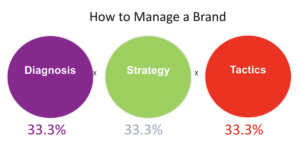
Marketing management is a four-stage process: diagnosis, strategy, tactics, and sales performance. Miss a step, and you’re building on sand.
Tourism Australia nailed every stage. They diagnosed the real problem (intention, not awareness), developed a clear strategy (who, what, and why), created tactics that served that strategy (the fake movie addressing distance barriers), and achieved the sales performance they needed (83% increase in intention, 13% increase in bookings).
That’s not just good marketing. That’s marketing as it should be practiced – strategic, measured, and ruthlessly effective.
And as they say down under: not bad for a day’s work, mate.
The Tourism Australia Dundee campaign demonstrates the power of strategic thinking in creating fundamentally effective campaigns. By starting with diagnosis rather than tactics, understanding the sales funnel, and executing with clarity, they transformed a stagnant market into a growth opportunity, proving once again that strategy, not just creativity, drives results. drives results.