When German discount retailer Lidl entered the UK market, it faced one of the world’s most competitive grocery landscapes. After twenty years of operation, the brand had achieved only a modest 3% market share. The breakthrough came through mastering a powerful marketing principle: Excess Share of Voice (ESOV). Between 2014 and 2017, Lidl doubled its market share to 6% and generated £2.7 billion in incremental sales.
Lidl faced two fundamental barriers to growth that plague many smaller brands competing against established market leaders.
The quality perception gap
British consumers assumed low prices meant low quality. Despite Lidl’s products being comparable to or superior to those of competitors, consumer research revealed significant perception gaps regarding food quality. Crucially, when shoppers accidentally discovered Lidl’s quality, they were “first surprised, then delighted, and finally became regular shoppers”. The challenge was engineering these surprise moments at scale.
The share of voice disadvantage
Marketing professor John Philip Jones discovered an “almost perfect correlation” between a company’s market share and its share of voice, the proportion of category advertising it contributes. Brands that underspend relative to their market share eventually see market share decline, while brands that overspend can grow market share over time.
For small brands like Lidl, this meant working harder than established competitors just to maintain position. Large brands enjoy significant advantages in advertising efficiency, with brand size being the top factor in marketing effectiveness.
The strategic response: Lidl surprises campaign
In 2014, Lidl launched its “Lidl Surprises” campaign with two interconnected objectives.
Communication strategy
The campaign emphasized surprise and quality discovery through television advertising, showcasing genuine consumer reactions, cleverly written print advertisements, and an innovative social media strategy. Lidl monitored and amplified customer tweets expressing surprise at product quality, even displaying them in-store to reinforce the quality message.
Media strategy: generating Excess Share of Voice
The transformation was dramatic. Before 2014, Lidl maintained 3% market share with 5% share of voice (2% ESOV). The aggressive overspend strategy included:
- 2014: 9% share of voice (6% ESOV)
- 2015: 19% share of voice (16% ESOV)
- 2016: 19% share of voice (16% ESOV)
- 2017: 15% share of voice (10% ESOV)
The results
Market performance: Lidl doubled its UK market share from 3% to 6% during the campaign period (2013 to 2018), with continued growth reaching 8.1% by 2024.
Perception transformation: The quality perception gap “very quickly disappeared to the point where it became a point of parity rather than a point of weakness”.
Financial impact: Lidl’s research attributed £2.7 billion in incremental sales to the campaign, earning a gold Effie award in 2017.
Key lessons
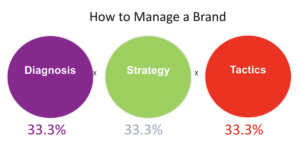
Start with diagnosis: Lidl’s success began with understanding the root causes of growth stagnation, both perceptual and structural barriers.
Embrace strategic investment: the decision to dramatically overspend on share of voice required significant short-term investment for long-term market position gains.
Integrate creative and media strategy: success stemmed from aligning creative messaging (surprise and quality) with media strategy (excess share of voice).
Measure what matters: focus on ESOV provided a clear, measurable framework for evaluating campaign effectiveness and confident investment decisions.
Lidl’s story demonstrates that sustainable competitive advantage sometimes requires the courage to spend above your current market position to achieve future market ambitions. The greatest success comes from harmonizing consumer insight, creative excellence, and mathematical marketing principles in service of clear, measurable growth objectives.