For over a century, Gillette has defined marketing excellence. Their playbook was elegant: every decade, launch a better razor, price it higher, migrate loyal customers upward, and watch profits compound. By 2005, they had successfully moved 70% of Mach 3 users to the premium Fusion line. The machine hummed with precision until it didn’t.
The 2008 financial crisis exposed a fatal assumption in Gillette’s strategy. The upgrade ladder that powered their business model suddenly became a barrier. Men earning $25,000-$45,000 weren’t climbing to Fusion anymore. Worse, they were stepping down to private-label razors to save money. The carefully engineered consumer journey had reversed direction, threatening to unravel decades of brand architecture.
What followed is a masterclass in how diagnosis-led marketing solves problems that intuition alone cannot crack. Gillette’s response combined surgical targeting for immediate sales with sustained mass marketing for long-term brand health – a dual approach that delivered a 20% sales increase at Walmart and validated timeless principles about how effective marketing actually works.
The diagnosis: understanding resistance before prescribing solutions
Too many marketers treat symptoms rather than causes. They see declining sales and immediately prescribe more advertising, better creative, or aggressive promotions. The equivalent of a doctor prescribing chemotherapy without examining the patient. Gillette avoided this trap by investing heavily in understanding exactly who wasn’t upgrading and why.
The research painted a precise portrait. The target wasn’t generic “men aged 18-34.” It was a specific psychographic profile: low-to-middle income earners who shopped at Walmart, watched professional sports, played video games, and believed “good enough is good enough” when it came to razors. They weren’t dissatisfied with Mach 3. They simply saw no compelling reason to spend more on Fusion. Their partners bought their blades 40% of the time, and those partners weren’t interested in disrupting the status quo, unless presented with a gift opportunity.
This level of diagnostic precision matters enormously. Broad targeting wastes resources. “Men who shave” describes hundreds of millions of potential customers but provides zero strategic direction. “Walmart-shopping Mach 3 loyalists aged 18-34 who over-index on sports and gaming” describes a segment you can actually design for. The difference between these two framings is the difference between strategy and guesswork.
The diagnosis also revealed a crucial insight about purchase behavior. These consumers operated in “refill mode”: walking into stores with predetermined shopping lists, heading straight to the blade cartridge aisle, and leaving without considering alternatives. Breaking this habitual pattern required more than messaging. It required disruption at the moment of consideration.
The strategic framework: converting loyalty through relevance
With the diagnosis complete, Gillette could articulate a clear strategic objective: convert Mach 3 users to Fusion by disrupting their refill cycle, presenting something personally relevant, and demonstrating value beyond product specifications. This clarity of purpose shaped every tactical decision that followed.
The positioning avoided the trap of competing on price. Instead, Gillette created a bridge between the consumer’s passions and the brand proposition. “Look their best, play their best” connected shaving to sports and gaming. Domains where this target audience has already invested time and identity. Rather than talking about blade technology or ergonomic handles, Gillette made Fusion relevant to what these men actually cared about.
This approach illustrates a fundamental marketing principle: benefits matter more than features, but relevance matters more than benefits. A five-blade razor with advanced lubrication strips offers functional benefits. But functional benefits alone don’t overcome inertia when “good enough” suffices. Creating relevance requires linking the product to something the consumer values beyond the category, in this case, team loyalty and gaming achievement.
The execution materialized as limited-edition Fusion razors co-branded with NFL teams and Madden 10, the year’s bestselling video game. Thirty-two different versions, each tied to local team pride, transformed a commodity purchase into a collectible expression of identity. This wasn’t just product placement. It was a product transformation through associative meaning.
Targeted activation: precision media for conversion
The campaign’s targeting precision extended to media selection. Gillette mapped the consumer’s journey from initial awareness through point-of-purchase conversion, deploying different media at each stage with specific objectives.
Radio advertising served as the pre-store primer. Local radio stations could differentiate messaging by team, reaching consumers before they entered Walmart with purchase intent already forming. Print ads in Sports Illustrated and similar publications reinforced the sports connection with visual impact. Digital banner ads and e-commerce placements captured active researchers. Google search advertising intercepted consumers at the moment of information-gathering. Each channel played a specific role in moving the consumer from awareness to consideration to conversion.
The point-of-purchase strategy deserves particular attention. Gillette placed displays not only in the grooming aisle but also in the electronics section where Madden 10 was sold. This cross-merchandising broke the refill pattern by presenting Fusion outside its expected context, creating an “interruption moment” when consumers weren’t in autopilot mode. The strategy recognized that habitual behavior requires environmental disruption, not just message repetition.
This multi-channel, stage-appropriate media approach contrasts sharply with scattershot marketing that deploys the same message across all channels simultaneously. Different media serve different functions. Radio builds awareness. Search captures intent. Point-of-purchase converts consideration. Effective campaigns match media characteristics to consumer journey stages rather than treating all touchpoints as interchangeable.
The results validated the precision. A 20% sales increase at Walmart represented enormous value given the retailer’s scale. More importantly, Walmart’s satisfaction created a strategic asset – strong retail relationships that facilitate future launches and maintain shelf prominence. The campaign earned a gold Effie Award in 2011, recognizing both its creative excellence and measurable business impact.
Mass marketing: building brand equity for the long game
While the limited-edition campaign targeted Mach 3 users with surgical precision, Gillette simultaneously invested in mass-market brand building. Television commercials featuring the “Best a Man Can Get” positioning ran continuously, reaching broad audiences with emotional brand messaging rather than product-specific calls to action.
This dual approach, targeted activation plus mass brand building, represents one of marketing’s most validated but frequently ignored principles. Research by Les Binet and Peter Field, analyzing thousands of campaigns, demonstrates that sustainable growth requires both. Yet marketers consistently fall into the trap of choosing one or the other, debating whether to “target segments” or “go after everyone”.
The answer, as Gillette proved, is both. Short-term sales activation benefits from precise targeting. Specific segments with defined needs and behaviors respond better to tailored messages than to generic appeals. But long-term brand building requires mass reach. Brands grow by maintaining mental availability with the entire category, not just current customers.
The mechanisms behind this principle are well-established. Targeted campaigns drive immediate sales by capturing consumers already in-market or close to purchase. They work quickly but fade quickly. Mass marketing builds memory structures and emotional associations that compound over time, creating brand equity that converts future purchases even when activation campaigns aren’t running.
Gillette’s long-running “Best a Man Can Get” campaign built these memory structures across decades. The mass-market messaging didn’t try to sell Fusion specifically. It positioned Gillette as the aspirational leader in male grooming, creating an emotional platform that all product launches could leverage. When activation campaigns like the Madden tie-in created consideration, the brand equity built through mass marketing reduced risk and increased conversion.
The optimal split between brand building and sales activation varies by category, but Binet and Field’s research suggests approximately 60% of the budget should flow to long-term brand building and 40% to short-term activation. Categories with longer purchase cycles benefit from higher brand-building ratios. Categories with frequent repurchase and strong seasonality can lean slightly more toward activation.
The paradox of precision: targeting everyone by targeting no one specifically
Looking at who Gillette didn’t target with the Madden campaign reveals something profound about strategic focus. If you’re over 35, you’re out. High net income? Out. Don’t shop at Walmart? Out. Not a Mach 3 user? Out. The addressable audience shrinks to a fraction of the total market, perhaps 5-10% of men in America.
This level of exclusion feels dangerous. Marketing departments instinctively resist narrowing their audience. “Why would we deliberately ignore 90% of potential customers?” The fear is understandable but misplaced. Targeting everyone with the same message means resonating with no one. Generic appeals designed for maximum inclusivity achieve minimum impact.
Effective targeting works because specificity creates relevance. A Cowboys fan sees the Dallas Cowboys Fusion razor as something made for them, not just marketed at them. A gamer recognizes the Madden 10 connection as speaking their language. These emotional responses don’t happen with generic messaging about blade quality or shaving comfort. Specificity transforms a transaction into a statement of identity.
The key insight is that targeted campaigns and mass marketing serve different functions and reach different audiences at different times. The Madden campaign targeted a specific segment for immediate conversion. The “Best a Man Can Get” campaign built equity with the entire category for long-term growth. Multiple simultaneous campaigns, each tightly focused, collectively reach more of the market more effectively than a single compromise message attempting to appeal to everyone.
Gillette ran multiple targeted campaigns in 2010 beyond just Madden. Campaigns encouraged Fusion users to shave body hair, driving usage frequency. Campaigns promoted more frequent cartridge replacement. Each targeted a specific behavior change within a specific segment. Combined with mass marketing, these campaigns created a portfolio approach that balanced precision and reach.
Why diagnosis beats intuition every time
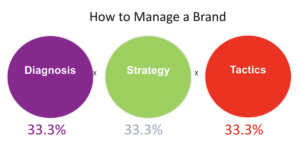
The Gillette case underscores a principle that separates effective marketing from expensive guesswork: diagnosis must precede strategy. Too many brands skip this step, proceeding directly from problem identification to solution implementation. Sales declining? Launch a promotion. Market share shrinking? Increase advertising. Competitors gaining? Cut prices.
These tactical responses sometimes work temporarily, but they rarely build lasting competitive advantage because they address symptoms rather than causes. Gillette could have responded to declining Fusion adoption with price cuts or generic advertising. Either approach might have generated short-term volume. Neither would have built sustainable growth or maintained premium positioning.
The research investment paid dividends precisely because it revealed the specific barriers preventing the upgrade. “Good enough is good enough” isn’t an insight you can act on. But “Mach 3 loyalists who over-index on sports and gaming see no emotional connection between their passions and their shaving choices” is actionable. That insight directly enabled the Madden partnership strategy.
Effective diagnosis requires multiple research methodologies. Gillette combined survey research to quantify the target segment, behavioral analysis to understand shopping patterns, and ethnographic observation to uncover emotional drivers. No single method provides a complete understanding. Survey data reveals what people report doing. Behavioral data reveals what they actually do. Qualitative research reveals why they do it. Triangulating across methods produces reliable insights.
The investment also matters. Diagnosis isn’t cheap. Research budgets compete with media budgets, and most organizations instinctively prefer spending on execution rather than investigation. But poorly targeted execution, no matter how creative, wastes more money than thorough research costs. Gillette’s research investment was substantial, but the resulting 20% sales increase at Walmart likely generated hundreds of millions in incremental revenue.
Lessons for building brands that compound value over time
The Gillette case validates several principles that apply far beyond razor marketing. First, understand your customer with precision that exceeds your own assumptions. The marketer is never the customer. Personal opinions about what messages will work or what products customers want corrupt the strategy. Market orientation, obsessive focus on understanding customer needs, behaviors, and decision processes, provides the foundation for everything else.
Second, balance targeted activation with mass brand building. Chasing short-term sales without investing in long-term equity creates a treadmill where each sale requires increasing effort. Building brand equity without driving conversion leaves money on the table. The combination compounds: brand equity makes activation more efficient, and activation provides the sales that fund brand building.
Third, make targeting decisions based on profit potential and strategic fit, not maximum reach. A small segment that values your differentiation and will pay premium prices often generates more profit than a large segment seeking commodity solutions. Gillette targeted a minority of male shavers with the Madden campaign but reached the specific minority most likely to convert. A broader reach would have diluted effectiveness.
Fourth, match media characteristics to campaign objectives and consumer journey stages. Awareness requires different media than conversion. Long-term brand building benefits from channels that build emotional connections. Short-term activation benefits from channels that capture intent and drive action. Treating all media as interchangeable ignores the specific strengths each channel offers.
Fifth, diagnostic rigor enables strategic confidence. When you understand the problem comprehensively, solution design becomes clearer. When insights rest on robust research rather than assumptions, execution decisions face less second-guessing. Gillette’s team could commit fully to the Madden strategy because their diagnosis gave them confidence in the approach.
The broader lesson concerns how marketing creates value over time
Brands that endure don’t rely on a single brilliant campaign or a permanently superior product. They build systems that continuously diagnose market conditions, develop strategies aligned with consumer needs, execute with precision across multiple touchpoints, and measure results to inform the next cycle. This disciplined approach, Neil McElroy’s 1931 framework that Ritson champions, remains the blueprint for sustainable brand building.
Marketing effectiveness isn’t mysterious. It requires understanding customers better than competitors do, offering differentiation that matters to specific segments, building distinctive brand assets that create mental availability, and executing with both short-term precision and long-term perspective. Gillette’s Madden campaign succeeded because it embodied all these principles simultaneously.
The challenge most marketers face isn’t a lack of these principles – they’re widely known and extensively documented. The challenge is consistently applying them under organizational pressure to shortcut research, compromise targeting, chase trends, or prioritize quarterly results over sustained growth. Effective marketing requires discipline to invest in diagnosis when intuition wants to jump to solutions, courage to exclude broad audiences when targeting demands specificity, and patience to build brand equity when activation promises immediate sales.
Gillette demonstrated this discipline, and the results speak clearly. A century-old brand maintained its leadership not through inertia but through rigorous application of fundamental principles. The lesson isn’t that sports partnerships or video game tie-ins represent universal solutions. The lesson is that deep consumer understanding, strategic clarity, targeted execution, and sustained brand building create a competitive advantage that transcends any single tactic.