In this talk, Mark Ritson challenged conventional thinking in brand management and marketing, offering insights on how marketers should approach their craft. Ritson’s contrarian views provide a refreshing perspective on longstanding industry practices.
Back to basics: the essence of Brand Management
Ritson argues that many brand managers have lost sight of their core responsibilities. He reminds of the Neil McElroy’s 1931 model of brand management, which emphasizes four key steps: diagnosis, strategy development, tactical execution, and result measurement. Too often, Ritson observes, brand management is reduced to mere communications and tactics, neglecting the crucial stages of diagnosis and strategy formulation.
The power of Market Orientation
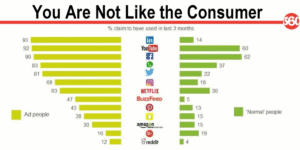
One of Ritson’s most emphatic points is the danger of relying on personal opinions about one’s brand. He stresses the importance of market orientation – understanding that the marketer is not the customer. This approach necessitates thorough research and customer insights, which Ritson sees as fundamental to effective marketing.
Crafting a robust Brand Strategy
Ritson laments that many companies operate without a proper brand strategy. He outlines that a good strategy should address key questions: which brands to operate, who the target customers are, what the brand position is, and what the objectives are. Importantly, Ritson advocates for simplicity in strategy, suggesting it should be concise enough to fit on a single page.
The targeting dilemma: finding the right balance
In the ongoing debate between targeted marketing and mass marketing, Ritson proposes a nuanced solution. He suggests using targeted approaches for short-term activation while employing mass marketing for long-term brand building. The ideal ratio, he posits, is often 60% brand building to 40% activation, though this can vary by category.
Differentiation meets distinctiveness
While differentiation remains crucial, Ritson highlights the growing importance of distinctiveness – unique brand assets that set a brand apart. He argues that brands should strive for both differentiation and distinctiveness, rather than focusing exclusively on one or the other.
Rethinking media strategy
Ritson challenges the notion of “digital marketing” as a separate entity, advocating instead for integrated marketing across all relevant channels. He emphasizes that the most effective campaigns utilize multiple media channels in combination, creating a holistic approach to reach and engage consumers.
In summary:
- Embrace the fundamentals of brand management: diagnosis, strategy, tactics, and measurement.
- Prioritize market orientation and deep customer understanding over personal opinions.
- Develop a clear, concise brand strategy to guide all marketing efforts.
- Strike a balance between targeted and mass marketing approaches for both short-term and long-term success.
- Aim for both differentiation and distinctiveness in brand positioning.
- Integrate multiple media channels for maximum campaign effectiveness.
- Move beyond the digital vs. traditional marketing divide and focus on comprehensive marketing strategies.
Ritson’s insights serve as a wake-up call for us marketers to reassess our approaches and return to the core principles of effective brand management. By challenging conventional wisdom and advocating for a more holistic, strategic approach, Ritson provides a roadmap for navigating the complex landscape of modern brand management.